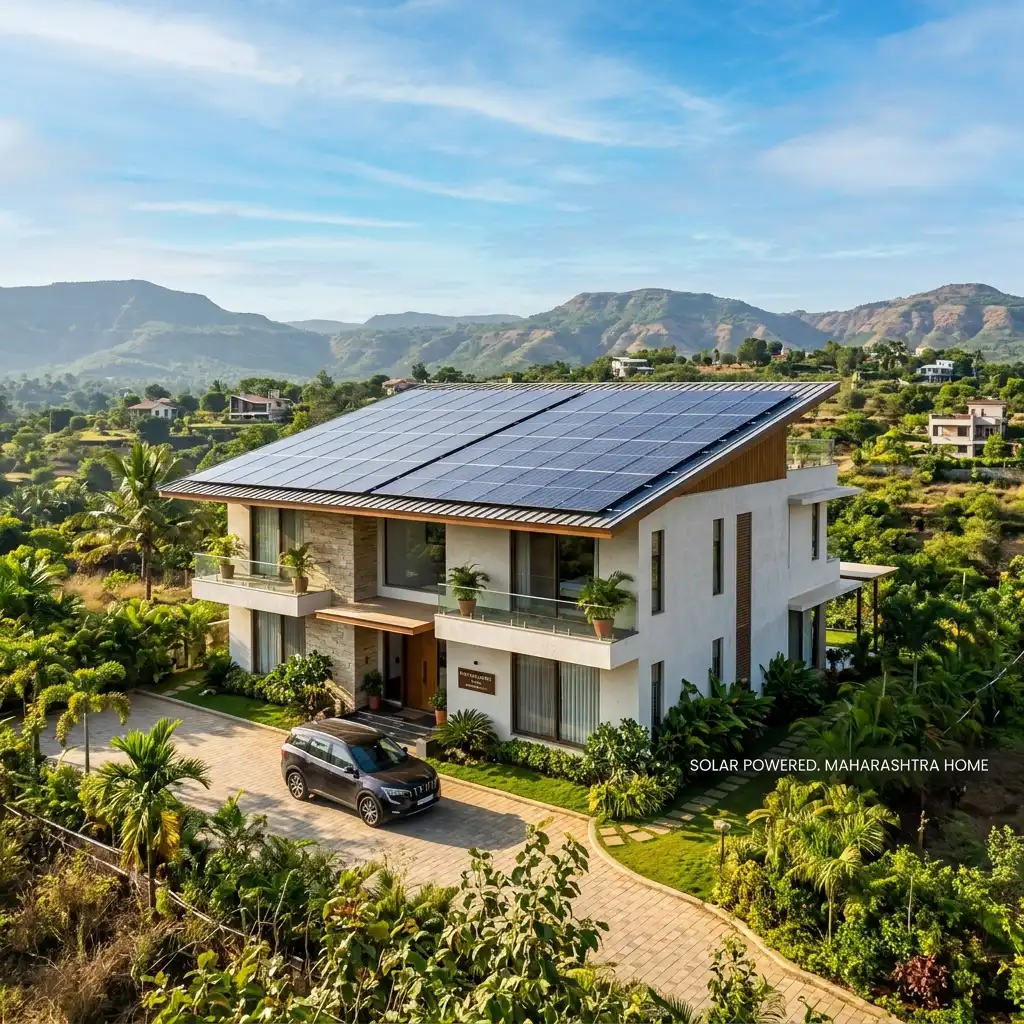
The Need for Solar in Maharashtra
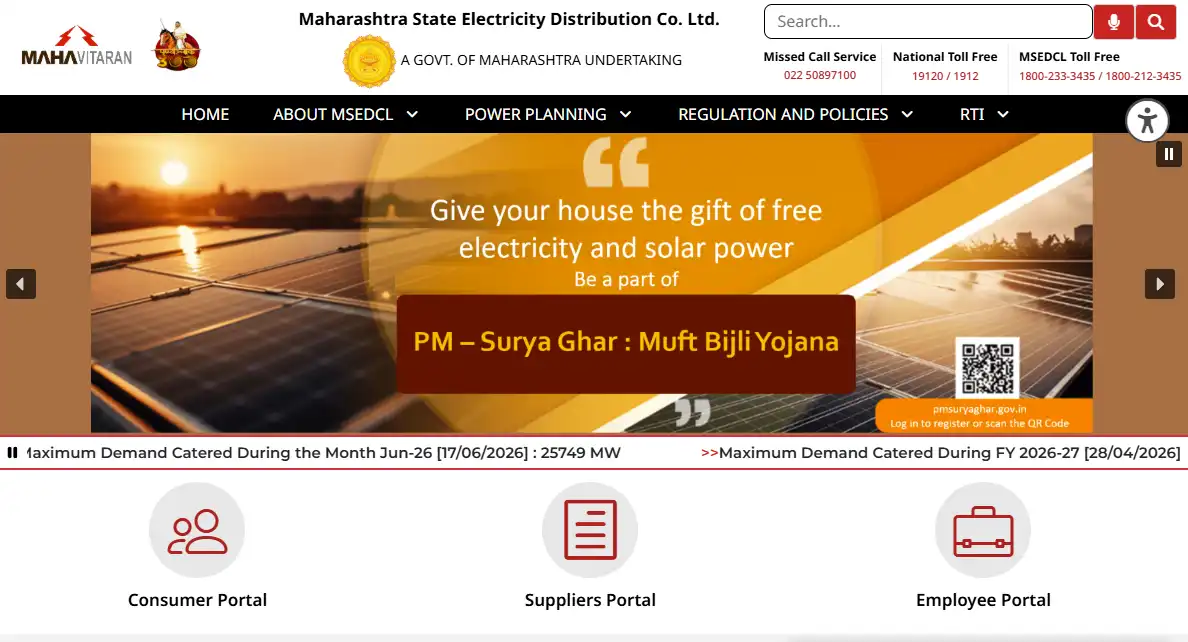
Residents of Maharashtra consistently face some of the highest residential electricity tariffs in India. During peak summer months, escalating AC usage can push households into upper tariff slabs, resulting in massive utility bills.
Because of this, transitioning to rooftop solar under the PM Surya Ghar Muft Bijli Yojana provides an exceptionally fast Return on Investment (ROI) for residents of this state, often paying for itself in less than 3 years.
Financial Benefits (2026 Guidelines)
Consumers in Maharashtra are fully eligible for the central subsidy structure, which scales based on the size of the plant you install:
- 1 kW System: ₹30,000 Subsidy
- 2 kW System: ₹60,000 Subsidy
- 3 kW to 10 kW System: ₹78,000 (Maximum fixed subsidy)
Navigating the State Agencies: MEDA & MSEDCL
When applying for rooftop solar in Maharashtra, you will interact indirectly with two major entities:
1. MEDA (Maharashtra Energy Development Agency)
MEDA acts as the state's nodal agency. They are responsible for promoting renewable energy and empaneling trusted vendors. When you select a vendor on the national portal, you are choosing from a list of highly vetted, MEDA-approved installers who guarantee quality and safety.
2. MahaDiscom (MSEDCL)
MSEDCL (Maharashtra State Electricity Distribution Co. Ltd.) is the primary electricity board for most of the state (outside of specific Mumbai zones serviced by BEST, Adani, or Tata Power). MSEDCL handles the crucial step of Net Metering.
The state has significantly streamlined the net-metering approval process. Once your empaneled vendor finishes the installation, an MSEDCL engineer will inspect the setup and install a bi-directional meter. This allows you to export excess power back to the grid during the day and draw it back for free at night.
Group Housing Societies (RWAs) in Mumbai & Pune
Given the vertical nature of housing in cities like Mumbai and Pune, individual rooftops are scarce. However, the PM Surya Ghar scheme offers immense benefits for Residential Welfare Associations (RWAs).
Societies can install massive solar plants on their high-rise rooftops to completely power common amenities like lifts, corridor lights, and water pumps. The government provides a subsidy of ₹18,000 per kW (up to a massive 500 kW capacity) specifically for these housing societies.