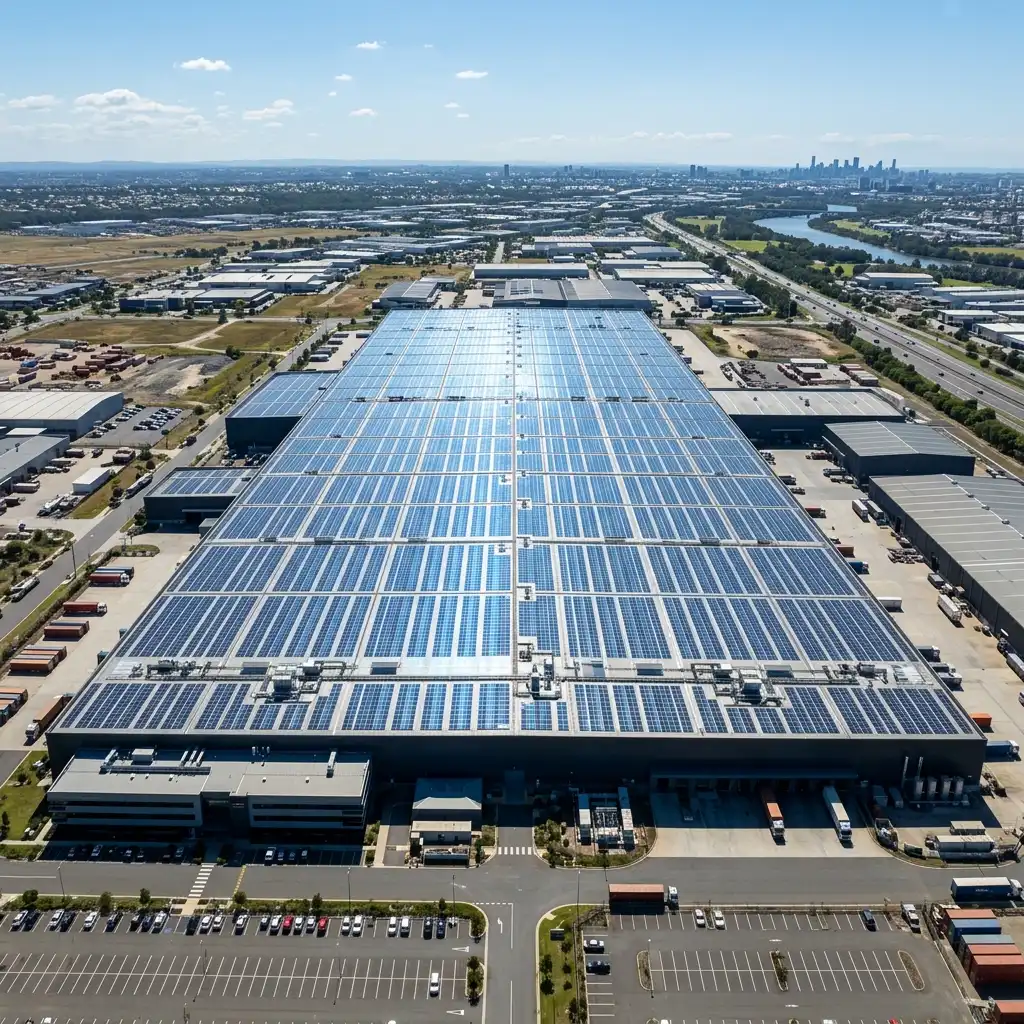
The Rise of Enterprise Solar Solutions
The Commercial and Industrial (C&I) sector consumes over 50% of the total electricity generated in India. Because commercial tariffs are notoriously high (often crossing ₹10 to ₹12 per unit), installing a Megawatt (MW) scale solar plant is one of the most lucrative, fast-payback capital investments a business can make in 2026.
Engineering, Procurement, and Construction (EPC)
For large-scale industrial installations, businesses do not hire local electricians. They partner with highly specialized, corporate EPC companies.
- What an EPC does: They handle the entire massive project lifecycle—from drone site surveying, 3D structural modeling, complex shadowing analysis, procurement of Tier-1 panels and central inverters, physical construction, grid synchronization, and securing complex government approvals like CEIG.
- Top Tier EPC Players in India: Tata Power Solar, Adani Solar, CleanMax, and Amplus Solar.
Key Engineering Considerations for Industrial Solar
Unlike a small residential roof, engineering a MW-scale industrial solar plant requires rigorous technical analysis to prevent catastrophic failures.
1. Roof Load Bearing Capacity
Industrial roofs (especially corrugated metal sheet roofs found in factories and warehouses) must be structurally sound to handle the immense dead weight of thousands of solar panels, plus the dynamic wind uplift forces during cyclones. Specialized non-penetrating seam clamps are utilized for metal roofs to absolutely guarantee zero water leaks.
2. Open Access Solar Farms
If a massive energy-consuming factory does not have enough physical roof space to meet its needs, they opt for "Open Access Solar." In this regulatory model, the business buys solar power from a massive utility-scale solar farm located hundreds of kilometers away. The green power is "wheeled" through the state transmission grid directly to the factory.
3. Power Quality and Harmonics
Heavy industrial machines (like CNCs, massive motors, and foundries) cause severe fluctuations in power quality. Commercial solar inverters must be highly advanced to handle reactive power compensation and ensure absolute grid stability without ever tripping sensitive factory equipment.