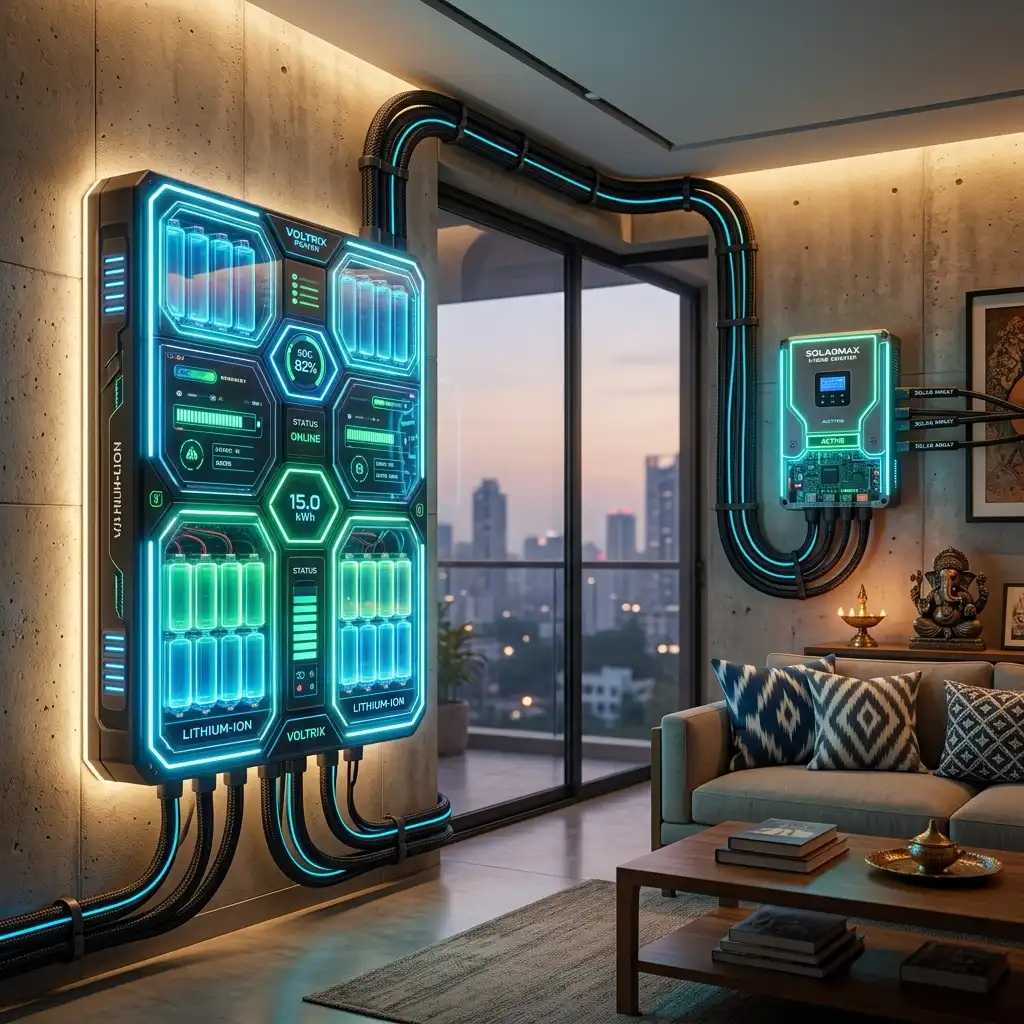
The Shift Towards Hybrid Solar Storage
While standard grid-tied systems with net metering (like those funded directly by PM Surya Ghar) are incredibly popular for saving money, they have one major flaw: They shut down entirely during a grid power cut for safety reasons (anti-islanding).
To have guaranteed power during blackouts, or to go completely off-grid, consumers must invest in a Hybrid Solar System with Battery Storage.
Types of Solar Batteries in 2026
Choosing the right battery chemistry is the most important decision for a hybrid solar setup.
1. Lithium-Ion / Lithium Ferro Phosphate (LiFePO4)
The Modern Standard: The highest quality, safest, longest-lasting, and most compact batteries on the market today.
- Lifespan: Typically lasts 10 to 15 years (yielding 3,000 to 6,000 deep charge cycles).
- Depth of Discharge (DoD): Can be safely drained down to 10-20% without damaging the battery chemistry.
- Target Audience: Premium homeowners and tech-enthusiasts looking for smart home integration and zero maintenance.
2. Lead-Acid (Tubular / Gel)
The Legacy Choice: Extremely heavy, bulky, and cheaper upfront, but require frequent replacement.
- Lifespan: Only lasts 3 to 5 years maximum.
- Depth of Discharge (DoD): Should never be drained below 50% capacity to prevent permanent, irreversible damage.
- Target Audience: Highly budget-conscious consumers and remote rural areas.
At a Glance: LiFePO4 vs Lead-Acid
| Feature | Lithium-Ion (LiFePO4) | Lead-Acid (Tubular) |
|---|---|---|
| Lifespan (Cycles) | 3,000 - 6,000 cycles (10+ years) | 500 - 800 cycles (3-5 years) |
| Depth of Discharge (DoD) | Up to 90% (Highly efficient) | Max 50% (Requires larger capacity) |
| Maintenance | Zero Maintenance | Requires regular water top-ups |
| Upfront Cost | Expensive | Cheaper |
| Long-term Value | Excellent (Cheaper over 10 years) | Poor (Requires multiple replacements) |
How Hybrid Solar Systems Work
To safely use batteries, a consumer requires a smart Hybrid Inverter. This device flawlessly manages power from the solar panels on the roof, the battery bank in your garage, and the state grid simultaneously without user intervention.
- ☀ During the Day: The solar panels power the house directly. Any excess energy is used to fully charge the battery. If the battery is full, the remaining excess is sold to the grid via net metering.
- ☾ At Night: The house seamlessly draws free power from the charged battery.
- ⚡ During Blackouts: The hybrid inverter instantly isolates your house from the dead grid, preventing your solar power from electrocuting line workers, while keeping your home's lights and appliances running perfectly off the battery.
Note: While PM Surya Ghar subsidizes the solar panels and standard grid-tied inverters, battery storage systems are considered premium upgrades and do not usually qualify for direct central government subsidies.