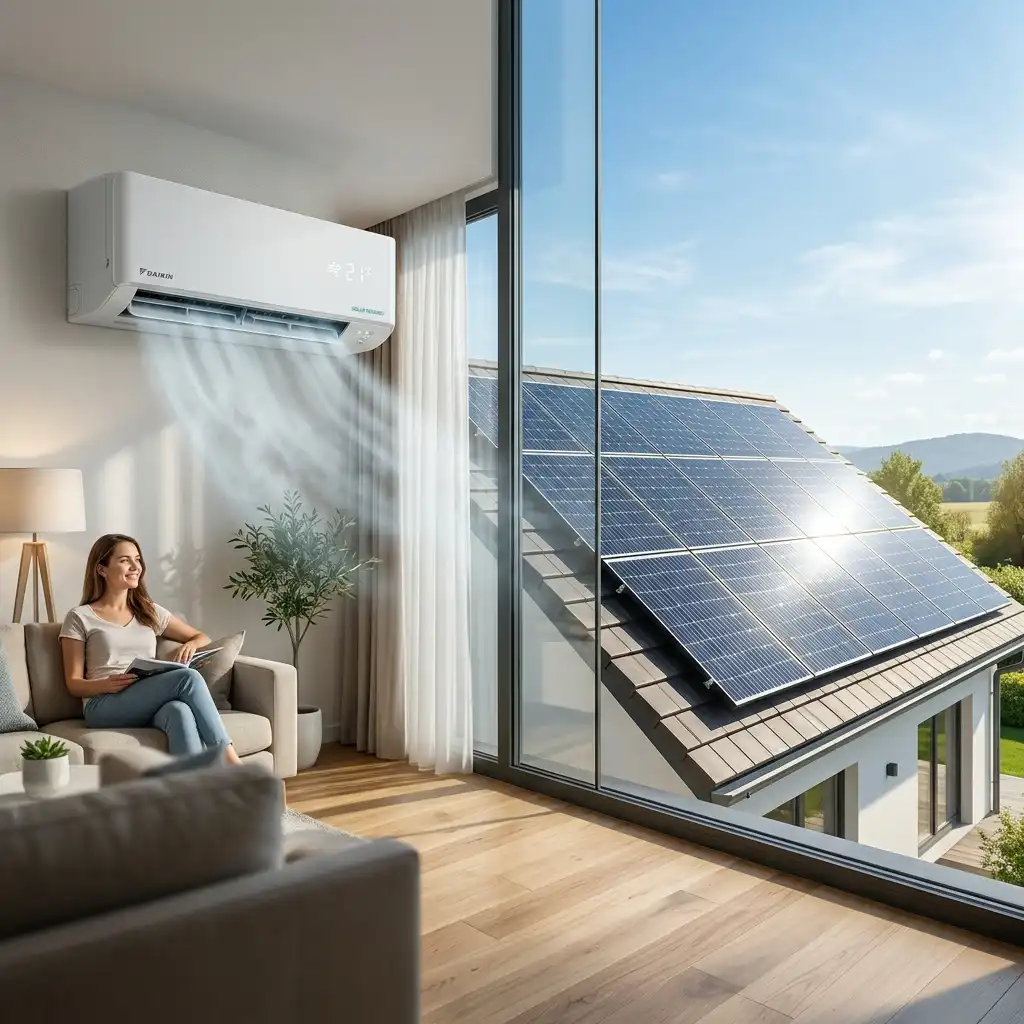
The Summer Dilemma
As summer temperatures soar across India, residential electricity bills absolutely skyrocket, primarily due to Air Conditioners. Everyone wants to know: Can a subsidized solar rooftop system under the PM Surya Ghar Yojana actually power my heavy AC loads?
The Short Answer: Yes, Absolutely!
You can run almost any household appliance on solar power, including heavy loads like Air Conditioners, Geysers, and Microwaves. However, it requires a bit of smart planning and the correct system sizing.
How Many Panels Do You Need for an AC?
An average 1.5 Ton Inverter AC consumes roughly 1.5 kW of power when the compressor is running at full speed.
- The 3kW Sweet Spot: A 3kW system is the gold standard for Indian homes. It generates around 12 to 15 units a day. This is more than enough to continuously run one 1.5 Ton AC for several hours during the day, plus handle standard loads like fans, lights, and a refrigerator simultaneously.
- Simultaneous Usage Warning: If you want to run two 1.5 Ton ACs at the exact same time, along with a heavy water pump, you might exceed the instantaneous 3kW generation limit of your panels, causing your inverter to pull the balance from the grid.
The Magic of Net Metering at Night
A common misconception is that solar panels only help during the day. Remember, under the PM Surya Ghar scheme, you are connected to the grid via a bi-directional net meter.
- During the Day (AC On): The AC runs directly on the pure solar power being generated on your roof. Free cooling!
- During the Day (AC Off): If you aren't using the AC, all that massive solar energy is exported to the government grid, earning you "credits".
- During the Night: Since panels don't generate power at night, your AC will run on standard grid electricity. However, because you earned surplus credits during the day, your night-time usage is offset, resulting in a zero bill.
3 Best Practices for AC Solar Users
1. Upgrade to Inverter ACs
Older, traditional window ACs have a massive "starting surge" current that can overload a solar inverter. Modern Inverter Split ACs ramp up their compressors slowly, making them incredibly friendly and efficient for solar systems.
2. Pre-Cool Your House
Since your panels are generating a massive surplus of free power during the blazing afternoon, use that time to run the AC and thoroughly cool down the walls of your home. This drastically reduces the AC's workload at night when you are relying on grid credits or battery storage.
3. The 24°C Rule
Keeping your AC fixed at a comfortable 24°C instead of forcing it down to 18°C significantly reduces the compressor's power consumption, allowing your generated solar credits to stretch much further through the month.