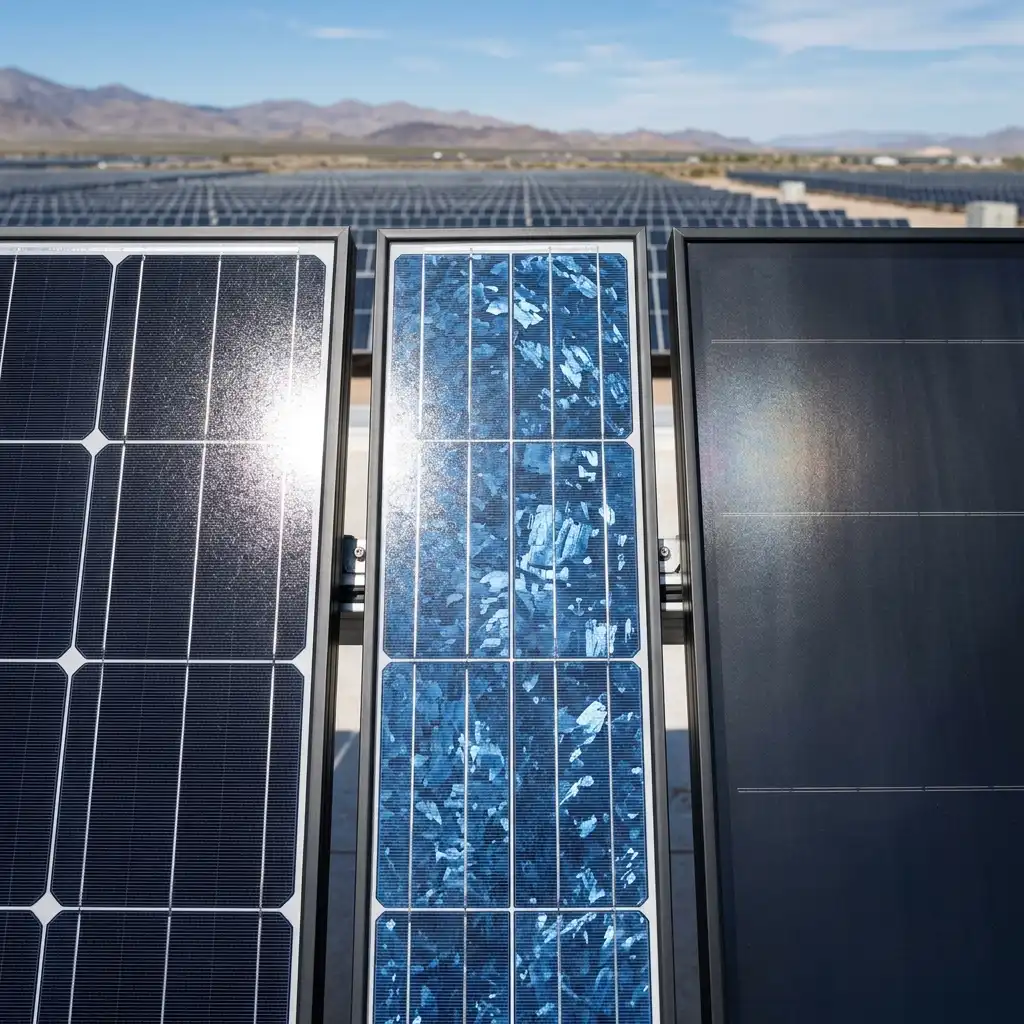
Choosing the Right Solar Panels
Under the PM Surya Ghar Yojana, consumers have the flexibility to choose the specific type of solar panels they want installed on their roof.
However, there is one non-negotiable rule: The panels MUST be ALMM (Approved List of Models and Manufacturers) certified and made in India to qualify for the subsidy. Imported Chinese panels are strictly prohibited under the scheme.
1. Polycrystalline Solar Panels
- Appearance: Distinctive blue, speckled look.
- Efficiency: Generally around 15% to 17%.
- Cost: Cheaper to manufacture and install.
- Best For: Large rural or suburban rooftops where physical space is not a constraint.
2. Monocrystalline Solar Panels
- Appearance: Uniform, sleek dark black color.
- Efficiency: Higher efficiency, typically 19% to 22%.
- Cost: Slightly more expensive than polycrystalline.
- Best For: Smaller urban rooftops where maximum power generation is needed in a highly limited space. (Highly recommended for 3kW systems).
At a Glance: Mono vs Poly
| Feature | Monocrystalline | Polycrystalline |
|---|---|---|
| Color / Look | Sleek Black | Speckled Blue |
| Efficiency Rate | 19% - 22% (High) | 15% - 17% (Moderate) |
| Space Efficiency | Excellent for small roofs | Requires more roof space |
| Price | Higher upfront cost | More budget-friendly |
Understanding Solar Inverters
Panels produce DC power, but your home uses AC power. You will also need to choose an inverter:
- String Inverters: Connects a whole "string" of panels together. This is the most common and cost-effective option for residential setups.
- Microinverters: Installed on each individual panel separately. They are more expensive but excellent if parts of your roof face partial shading during the day (e.g., from a water tank or tree).
How to Clean and Maintain Your Solar Panels
Solar panels require very little maintenance, as they have no moving parts. However, regular cleaning is absolutely essential to ensure maximum efficiency.
A thick layer of dust or bird droppings can rapidly reduce power generation by up to 15-20%.
The Golden Rules of Cleaning:
- ✓ Frequency: Wash panels 1-2 times a month, depending on the dust and pollution levels in your city.
- ✓ Method: Use a soft sponge, very mild soap, and water. Never use abrasive brushes that can permanently scratch the anti-reflective glass coating.
- ✗ Timing Warning: Clean panels early in the morning or late in the evening when they are cool. Cleaning scorching hot panels in the mid-day sun with cold water can instantly crack the glass due to thermal shock.
- ✓ Annual Checkups: Have your vendor perform an annual check of the DC wiring, inverter connections, and earthing to ensure fire safety. (Vendors provide 5 years of AMC under the PM Surya Ghar scheme guidelines).