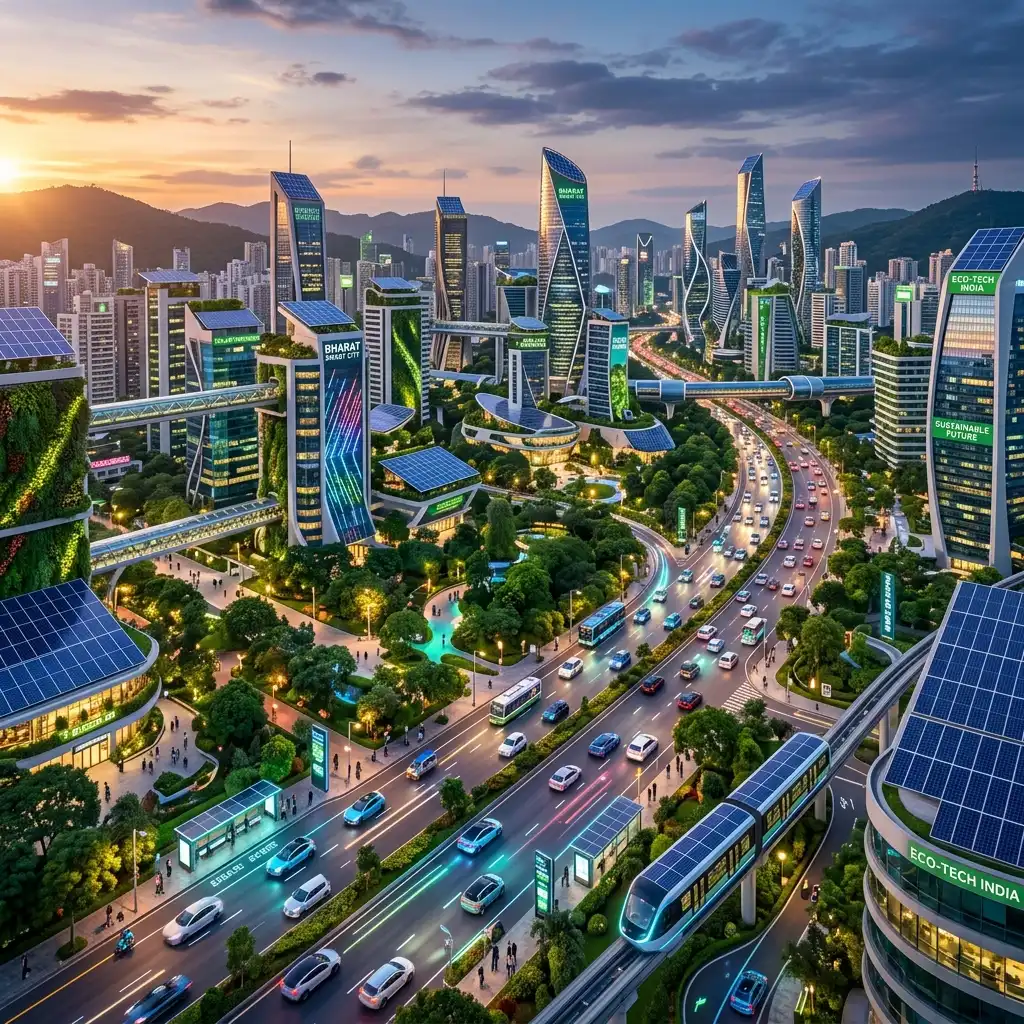
A Renewable Revolution is Here
India is currently witnessing one of the fastest transitions to renewable energy in the entire world. The launch of the PM Surya Ghar Muft Bijli Yojana is just one piece of a massive, ambitious jigsaw puzzle aimed at achieving a staggering 500 GW of non-fossil fuel capacity by 2030.
What does the future hold for solar in India over the next few years? Here are the top 4 trends reshaping the industry in 2026.
Trend 1: Massive Price Drops in Energy Storage
Currently, large Lithium-ion batteries are expensive, which is why most residential solar installations are Grid-Tied (without batteries). However, experts predict that as gigafactories scale up domestic battery production in India (aided heavily by PLI schemes), the cost of energy storage will plummet by 40-50% over the next 5 years. Soon, Hybrid systems with built-in battery storage will become the standard, making homes completely independent of the grid.
Trend 2: Seamless Electric Vehicle (EV) Integration
The future of solar is deeply intertwined with EVs. As millions of Indian households purchase electric cars and two-wheelers, the demand for home electricity will surge. Future solar inverters will come with integrated smart EV charging ports. Homeowners will use their rooftop solar panels to directly charge their vehicles during the day, essentially driving on pure sunlight for absolutely free.
Trend 3: Peer-to-Peer (P2P) Solar Trading
Imagine a future where you generate excess solar power and, instead of selling it back to the government DISCOM at a fixed rate, you sell it directly to your neighbor who doesn't have solar panels, using blockchain technology to securely track the financial transaction. Pilot projects for peer-to-peer (P2P) solar trading are already being actively tested in states like Uttar Pradesh and Delhi.
Trend 4: Aesthetic Solar (BIPV)
Right now, solar panels are bulky rectangular blocks bolted onto the roof. The future lies in Building-Integrated Photovoltaics (BIPV)—solar panels that are built directly into the architecture of the house. We will soon see solar roof tiles, semi-transparent solar glass windows, and solar facades that generate power invisibly, preserving the aesthetic beauty of the home.
Conclusion
The PM Surya Ghar scheme has successfully ignited the grassroots adoption of solar energy across India. For early adopters, the financial benefits are immediate and massive. For the nation, it marks the beginning of an era of energy independence, rapid technological innovation, and a significantly cleaner environment.