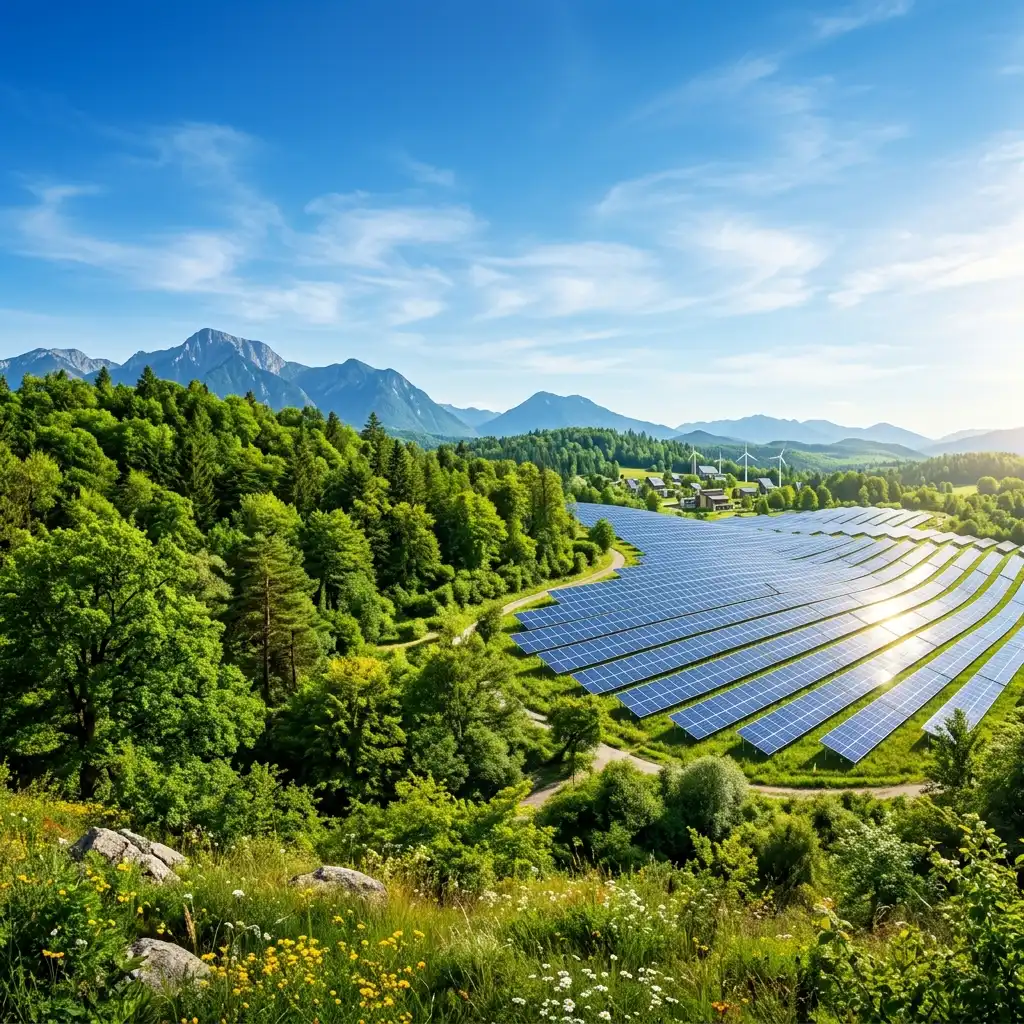
More Than Just "Muft Bijli"
The PM Surya Ghar Muft Bijli Yojana is not just about saving money on your monthly electricity bills. It is a highly strategic, critical component of India's commitment to achieving Net-Zero carbon emissions by 2070.
By transitioning from heavily polluting coal-powered electricity to 100% renewable solar energy, individual households are actively participating in the global fight against climate change while securing their own financial future.
The Unbeatable Economic Advantages
Installing solar panels is one of the smartest financial decisions a homeowner can make in 2026. Here is why:
1. Protection Against Tariff Hikes
Electricity tariffs have historically increased by 3% to 5% annually across almost all Indian states. By generating your own power, you effectively "lock in" your electricity cost at a fixed, zero rate for the next 25 years.
2. Increase in Property Value
Homes equipped with a fully functional, grid-tied solar system with active net metering command a noticeably higher resale and rental value in the modern real estate market.
3. Generate Passive Income
Under the net metering mechanism, if your household consistently generates more power than it consumes over the year, the DISCOM literally pays you for the surplus units, turning a standard household expense into a minor revenue stream!
The Environmental Impact
The ecological benefits of mass rooftop solar adoption are staggering:
- ✓ Reduction in Carbon Footprint: A standard 3kW solar rooftop system can offset approximately 3 to 4 tons of carbon dioxide (CO2) emissions every single year. Over its 25-year lifespan, this is equivalent to planting over 100 mature trees.
- ✓ Massive Conservation of Water: Traditional thermal coal power plants use millions of liters of fresh water strictly for cooling purposes. Solar photovoltaic systems require absolute zero water to generate electricity (only a tiny amount is needed for periodic cleaning).
- ✓ Reduced Urban Air Pollution: Decreasing the reliance on fossil fuels directly reduces the emission of harmful pollutants like sulfur dioxide, nitrogen oxides, and particulate matter (PM2.5), leading to cleaner air and better public health in crowded Indian cities.
- ✓ Lower Transmission Losses: Since the electricity is generated and consumed exactly where it is needed (on your roof), the immense transmission and distribution (T&D) power losses that plague the Indian national grid are entirely avoided.