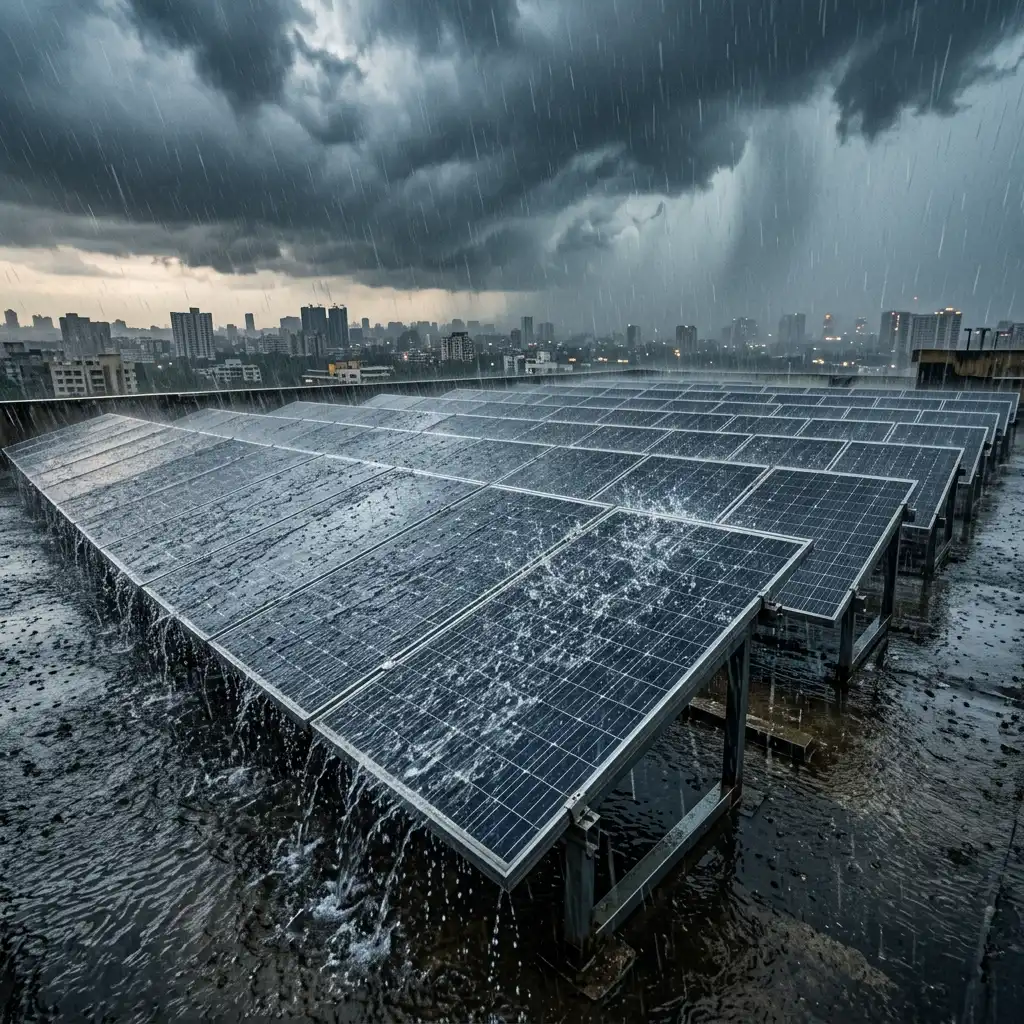
The Big Weather Question
One of the most frequently asked questions by homeowners considering the PM Surya Ghar Yojana is: "What happens when it rains? Will my house lose power during winter or the monsoon?"
To answer this, we must first understand a fundamental scientific truth: Solar panels generate electricity from light (photons), not heat. In fact, high heat (like in peak Indian summers) actually slightly reduces the efficiency of solar cells.
Performance During the Monsoon 🌧️
- Overcast Skies: Yes, heavy, dark clouds reduce the amount of direct sunlight reaching the panels. During a completely overcast monsoon day, your panels will still generate power, but the output might drop to 30% to 50% of their peak capacity.
- The Secret Rain Advantage: Rain is actually incredibly beneficial for solar panels! A heavy downpour acts as a free, natural cleaning service, washing away weeks of accumulated dust and grime, which immediately boosts efficiency once the sun comes back out.
- No Power Cuts: Since the PM Surya Ghar scheme uses Grid-Tied systems with Net Metering, if your panels aren't generating enough during a rainy day, your home will seamlessly draw the required power from the regular electricity grid. You will NOT be sitting in the dark.
Performance During Winter ❄️
Believe it or not, winter is arguably one of the absolute best times for solar generation in India.
- Clear Skies & Cool Temps: Many parts of India experience crisp, clear skies during winter. Because the panels operate more efficiently when they are cool, they often hit their absolute peak power ratings on clear winter days.
- Shorter Days: The only downside of winter is that the days are geographically shorter, meaning the overall window for peak generation is reduced compared to summer.
The Annual Average is What Matters
You don't need to worry about the daily weather. While day-to-day generation fluctuates, solar systems are designed and financially modeled based on the annual average sunlight (which is incredibly abundant in India).
The massive surplus of free electricity units you generate in summer and winter will easily compensate for the lower generation days during the monsoon via the net metering mechanism.